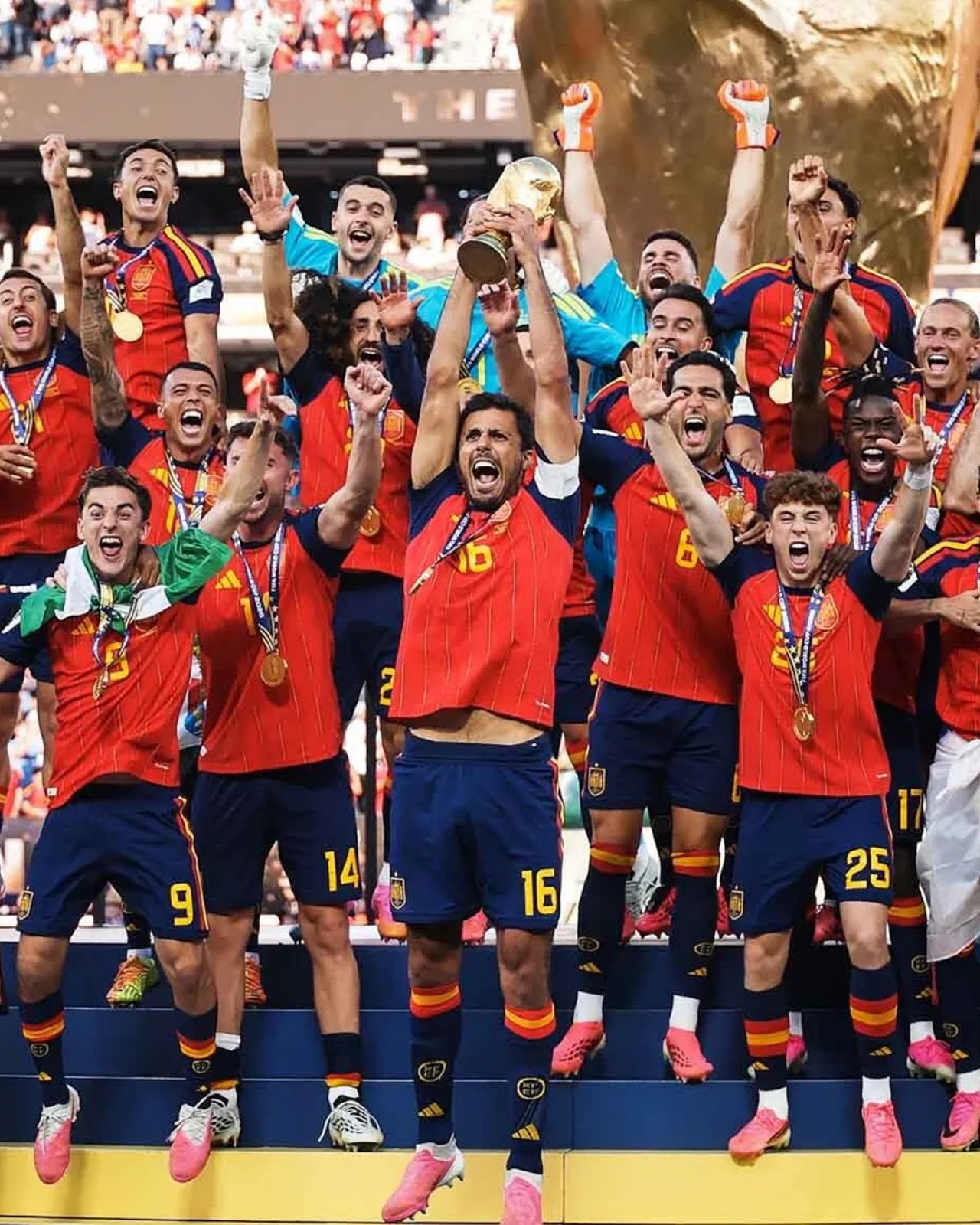
Spain has once again reached the summit of world football. After a remarkable campaign defined by tactical discipline, technical excellence, and composure under pressure, La Roja defeated Argentina 1–0 after extra time to lift the FIFA World Cup 2026™, securing the nation’s second men’s World Cup title, 16 years after its historic triumph in South Africa.
The final, played at New York New Jersey Stadium, brought together two footballing giants in a contest that lived up to its global significance. Spain controlled possession for much of the match, patiently dictating the tempo against the defending champions. Despite Argentina’s resilient defending and several crucial saves from goalkeeper Emiliano Martínez, the breakthrough finally arrived in the 106th minute when Ferran Torres finished a well-worked move to score the decisive goal and write his name into football history.
Spain’s victory was far more than a single successful evening. Throughout the tournament, the team demonstrated consistency, balance, and maturity, blending experienced leaders with an exciting generation of young talent. Guided by head coach Luis de la Fuente, Spain showcased a style of football built on intelligent movement, technical precision, and collective teamwork rather than individual brilliance alone. Their ability to dominate possession while remaining defensively organized became the hallmark of their championship campaign.
For Argentina, the final marked the end of an extraordinary era. As defending champions, they entered the tournament carrying the expectations of millions and the legacy of one of football’s greatest generations. Although they fell just short of retaining the trophy, their journey to another World Cup final further cemented their place among the sport’s elite. The occasion also represented another memorable chapter in the remarkable international career of Lionel Messi, whose influence on world football extends well beyond trophies and statistics.
Spain’s triumph also carries historic significance beyond the men’s competition. With the country’s women already reigning as FIFA Women’s World Cup champions, Spain has become the first nation to simultaneously hold both the men’s and women’s world titles—an achievement that reflects the strength of its football development system and long-term investment in talent.
The 2026 FIFA World Cup itself will be remembered as a landmark edition. Hosted jointly by the United States, Canada, and Mexico, it was the first tournament to feature 48 national teams, introducing a new level of global participation and expanding football’s reach to new audiences around the world. The final also attracted record television audiences in several markets, underlining football’s growing international appeal.
As celebrations continue across Spain, this victory symbolizes more than another star on the national jersey. It marks the beginning of a new chapter for a team that has successfully blended tradition with innovation, experience with youth, and tactical intelligence with fearless ambition.
For football supporters around the world, Spain’s 2026 World Cup victory is a reminder that greatness is never permanent—it must be earned again and again. This summer, La Roja proved that the future of football can be built on patience, unity, and unwavering belief, reclaiming its place at the very top of the global game.
Leave a Reply